If you’ve ever wanted to rejuvenate your skin but hesitated at the thought of synthetic fillers, you’re not alone. More and more people are turning to PRF treatment, a regenerative approach that uses your own blood’s healing power to naturally restore youthful volume and glow—without the “overfilled” look or unwanted side effects of dermal fillers.
Enter PRF (Platelet-Rich Fibrin) Treatment — the next generation of regenerative aesthetics. PRF treatment harnesses your body’s own healing potential to rejuvenate skin from within. Unlike hyaluronic acid fillers that simply fill space, PRF actually stimulates your body to regrow and remodel tissue.
Let’s dive into what makes PRF treatment such a powerful and natural alternative to traditional cosmetic fillers.

What is PRF?
PRF stands for Platelet-Rich Fibrin, a second-generation platelet concentrate derived from your own blood. It’s similar to PRP (Platelet-Rich Plasma) but takes things a step further.
Here’s how it works — three ways to create PRF:There’s an important nuance in how PRF is prepared. Different methods produce matrices with different textures and biological behaviors — and that affects how they’re used clinically.
How does PRF Treatment work?
1. Long-spin centrifugation (solid PRF formation):
Blood is centrifuged long enough for plasma to separate from denser red blood cells. The upper layer that forms can be extracted as a solid PRF clot. Clinically this solid fibrin is often dissected into pieces and used in surgical/dental packing, wound repair, or to fill small defects. This dense clot provides a scaffold that promotes healing and has anti-infective properties in local tissues.
2. Activator-triggered PRF (chemical activation):
Platelet-rich plasma (PRP) can be activated by adding calcium chloride or thrombin. Activation causes platelets to rapidly release growth factors, cytokines, and bioactive proteins and converts fibrinogen into a very dense fibrin matrix. This method yields a hard, highly cross-linked fibrin that can be useful when a stable, rigid scaffold is desired; however, activation is a different approach than the classic “no-additive” PRF workflows and produces a much firmer product.
3. Heat-modified PRF (thermally altered matrix):
After centrifugation, the platelet-rich plasma fraction can be exposed to controlled heat. This heat-generated PRF changes the fibrin architecture and mechanical properties of the matrix. Temperature and exposure time must be precisely controlled: too much heat denatures proteins and compromises function. When done correctly, thermal modification can enhance fibrin characteristics for specific clinical uses.
Key takeaway: PRF is not a single, uniform product. Clinicians choose protocols (spin settings, activators, or heat) to produce a clot or liquid that best fits the intended treatment — from soft, injectable liquid to firm plugs used in surgery.
In contrast, PRP releases its growth factors within a few hours. PRF continues to release them gradually — meaning longer-lasting healing, collagen production, and rejuvenation.

How PRF Is Used in Aesthetic Medicine
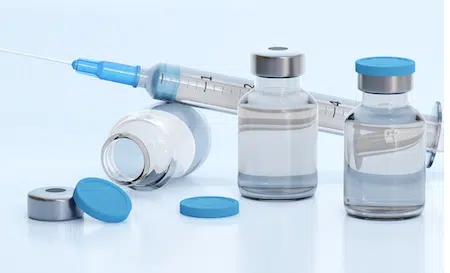
PRF can be injected anywhere you’d normally use dermal fillers — such as the cheeks, nasolabial folds, and lips. It’s also popular for PRF under eye treatments to improve hollowing and dark circles.
Other popular treatments used in conjunction include:
- PRP microneedling
- PRP hair restoration for thinning hair or postpartum hair loss
- PRP + PRF + exosomes or peptides for next-level regenerative synergy
PRF vs. Cosmetic Fillers: What’s the Difference?
PRF (Platelet-Rich Fibrin) | Cosmetic Fillers (Hyaluronic Acid, etc.) | |
|---|---|---|
| Source | 100% autologous (from your own blood) | Synthetic or cross-linked hyaluronic acid |
| Mechanism | Regenerates tissue, stimulates collagen & elastin | Adds volume by filling space |
| Results | Natural, gradual, long-term improvement | Immediate but temporary correction |
| Longevity | Builds over 1–3 months; can last 12–18 months | 6–12 months average (depends on filler) |
| Side Effects | Minimal; no risk of allergic reaction or vascular occlusion | Risk of overfilling, lumps, vascular complications |
| Ideal For | Patients seeking natural rejuvenation | Patients wanting instant volume |
PRF doesn’t act like a synthetic gel. Instead, it recruits your body’s stem cells and growth factors (such as VEGF, PDGF, TGF-β, and IGF-1) to remodel skin structure and restore youthful tone and volume .
The results are subtle, yet powerful — your skin looks firmer, smoother, and more radiant without looking “done.”
The PRF Injection Process
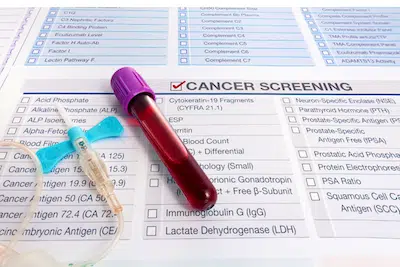
1.) Blood Draw: About 10–20 mL of your blood is drawn — similar to a basic lab test.
2.) Centrifugation: The blood is spun for several minutes to separate PRP from red blood cells.
3.) Preparation: The fibrin matrix (rich in growth factors) is processed and collected into syringes for injection.
4.) Injection: The injection is strategically placed into the treatment area using a fine needle or cannula.
5.) Healing: Over the next several days, treatment session slowly releases growth factors that stimulate collagen, elastin, and microcirculation.

Because it’s derived from your own blood, there’s virtually no risk of allergic reactions, granulomas, or vascular occlusions — issues that can sometimes occur with synthetic fillers .
PRF Treatment Results and What to Expect
PRF injection results appear gradually as your body rebuilds collagen and regenerates tissue. Most patients start noticing visible improvements within 2–4 weeks, with optimal results around 2–3 months.
For best outcomes, we often recommend a series of 2–3 treatments spaced 4–6 weeks apart, followed by maintenance sessions every 6–12 months.
The results aren’t “instant” like fillers — they’re better. You’re not masking aging; you’re reversing it at the cellular level.
PRF vs. PRP
PRF is The Next Generation of Regeneration
PRF injections are essentially an upgrade from PRP
It contains:
- Higher concentrations of platelets and white blood cells
- A fibrin scaffold for slow growth factor release
Clinical research supports PRF’s enhanced regenerative properties over PRP, showing greater collagen synthesis, angiogenesis (new blood vessel growth), and tissue repair.

The Bottom Line: PRF Is the Future of Natural Rejuvenation
If you value natural beauty, safety, and regeneration, PRF is one of the most advanced treatments available today.
It’s perfect for anyone seeking a holistic, longevity-focused alternative to synthetic fillers — whether you’re addressing volume loss, fine lines, or under-eye hollows.
Instead of filling space, PRF stimulates your body to restore its own youthful structure.
That’s true anti-aging from within.
Ready to Rejuvenate Naturally?
Book your PRF Natural Filler or PRP Microneedling session today!
Let’s restore your glow — naturally, safely, and beautifully.
If you’re in Santa Barbara, click here now to request your appointment
References
-
Choukroun J, et al. Platelet rich fibrin (PRF): A second-generation platelet concentrate. Part I: Technological concepts and evolution. Oral Surgery, Oral Medicine, Oral Pathology, Oral Radiology, 2006.
View Source -
Kobayashi E, et al. Comparative release of growth factors from PRP, PRF, and advanced-PRF. Oral Surg Oral Med Oral Pathol Oral Radiol, 2016.
View Source -
Dohan Ehrenfest DM, et al. Classification of platelet concentrates: From pure PRP to leukocyte- and platelet-rich fibrin (L-PRF). Trends Biotechnol, 2009; 27(3):158-67.
View Source -
Fujioka-Kobayashi M, et al. Influence of platelet-rich fibrin on cell proliferation and differentiation. Int J Implant Dent, 2017.
View Source -
Pavlovic V, et al. Platelet-rich fibrin: Basics of biological properties. Med Biol, 2012.
View Source -
Ghanaati S, et al. Advanced platelet-rich fibrin: A new concept for tissue regeneration. Int J Growth Factors Stem Cells Dent, 2014.
View Source -
Miron RJ, et al. Use of platelet rich fibrin in regenerative medicine: A systematic review. Clin Oral Investig, 2017.
View Source