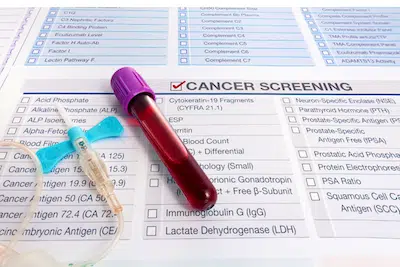
Cancer treatment is a vital part of recovery after receiving a cancer diagnosis, but it’s not the end of the process. Many patients are left asking the same question: how can I help prevent cancer recurrence and support my body after treatment?
The honest answer is that cancer recurrence cannot be fully prevented or guaranteed. Recurrence risk depends on cancer type, stage, tumor biology, treatment response, genetics, and many other factors. However, there are meaningful, evidence-informed steps that may help reduce risk and support long-term health.
A practical survivorship plan focuses on the areas you can influence: nutrition, movement, sleep, stress regulation, metabolic health, follow-up care, and safe, individualized support from your medical team.
At Regenerate Health Medical Center, we view survivorship as an active process. It is not about replacing conventional oncology care. It is about helping the whole person recover, rebuild, and stay engaged in their long-term health.
Quick Answer (TL;DR): How to Help Prevent Cancer Recurrence
Cancer recurrence cannot be fully prevented or guaranteed. However, survivors may be able to help reduce recurrence risk by staying consistent with follow-up care, maintaining a healthy weight, eating a fiber-rich whole-food diet, exercising regularly, sleeping well, managing stress, avoiding tobacco, limiting alcohol, and working with a qualified medical team.
- Stay consistent with oncology follow-up visits and recommended screenings
- Eat a whole-food, fiber-rich diet with adequate protein and healthy fats
- Exercise regularly, including strength training when appropriate
- Support sleep, stress regulation, and metabolic health
- Review supplements, IV therapy, and integrative options with a qualified clinician
What Does Cancer Recurrence Mean?
Types of recurrence
Cancer recurrence can show up in different ways:
- Local: returns in the same area
- Regional: spreads to nearby lymph nodes or tissues
- Distant: appears in other parts of the body
Why risk varies
Recurrence risk is not the same for everyone. It depends on:
- Cancer type
- Stage at diagnosis
- Tumor biology
- Treatment response
Conventional Treatment Is Essential, and Survivorship Is Still Active
Conventional oncology plays a critical role in tumor control, be it through surgery, chemotherapy, radiation, and targeted therapies.
But once treatment is complete, patients often enter a “watch and wait” phase.
But “watch and wait” does not have to mean doing nothing. Survivorship care can give patients a structured way to support their health while continuing appropriate follow-up with their oncology team.
Survivorship care focuses on:
➡ Recovery
➡ Metabolic health
➡ Inflammation
➡ Lifestyle factors that may influence recurrence risk

Can Cancer Recurrence Be Prevented?
Some recurrence risk factors are outside your control. Others are areas where daily habits, clinical monitoring, and supportive care may make a meaningful difference.
Within your control
✔️ Nutrition and metabolic health
✔️ Physical activity and body composition
✔️ Sleep quality
✔️ Stress regulation
✔️ Environmental exposures
Outside your control
❌ Genetics
❌ Tumor biology
❌ Certain treatment-related factors
Here we are striving for consistency over perfection, especially focusing on the areas that matter most to total body wellness.
The Highest-Impact Areas to Focus On!
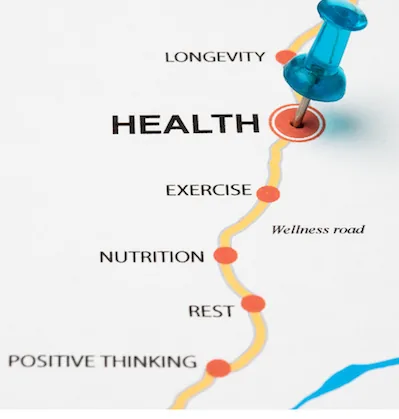
If you break it down, survivorship focuses on a few key pillars:
👉🏼 Nutrition
👉🏼 Movement
👉🏼 Sleep
👉🏼 Stress
👉🏼 Strategic supplementation
👉🏼 Follow-up care
Diet to Help Reduce Recurrence Risk
Nutrition plays a central role in metabolic health, inflammation, and immune function.
What to emphasize ‼️
Whole, minimally processed foods 🥙
High-fiber intake (vegetables, legumes, whole grains) 🥦
Adequate protein for recovery and muscle maintenance 🍗
Healthy fats (olive oil, nuts, seeds, fatty fish) 🫒
What to limit ❌
Ultra-processed foods 🍕
Excess added sugar 🧁
Alcohol, this is even more important in hormone-sensitive cancers 🍷
A Simple Framework
Think in terms of building meals:
Protein + fiber + healthy fat 🥙
Consistent meal timing ⏱️
Avoiding large swings in blood sugar 📈

A personalized clinical nutrition plan can help patients rebuild strength, support metabolic health, and create sustainable eating habits after treatment.
Does Exercise Help Prevent Cancer Recurrence?
Movement is one of the most consistently supported lifestyle factors
in survivorship.

Regular exercise is associated with improvements in:
- Insulin sensitivity
- Inflammation
- Body composition
- Energy levels and mood
A realistic plan
- Daily movement (walking is a great starting point)
- Strength training 2–3 times per week
- Adjust intensity based on recovery status
Sleep, Stress, and the Nervous System
These are often overlooked, but recovery is highly impactful in promoting positive health outcomes.
Sleep
Sleep plays a role in:
🔹 Immune Regulation
🔹 Hormonal Balance
🔹 Recovery
Focus on:
✔️ Consistent sleep/wake times
✔️ Reducing light exposure at night
✔️ Creating a simple wind-down routine
Stress
Stress is not just a burden on one’s psychology, but it has physiological effects:
🔹 Hormonal Changes
🔹 Immune Modulation
🔹 Inflammatory Signaling
➡️ Breathwork
➡️ Time outdoors
➡️ Structured routine
➡️ Yoga & Meditation
Supplements: How to Approach Them Safely
Supplements can play a role—but they are not a replacement for lifestyle foundations.
Key principles
👉🏼 Individualize based on the patient
👉🏼 Avoid high-dose, unsupervised protocols
👉🏼 Consider interactions with medications or ongoing treatments
Common categories patients ask about:
✒️ Vitamin D
✒️ Omega-3 fatty acids
✒️ Antioxidants
✒️ Anti-inflammatory
✒️ Immune modulation
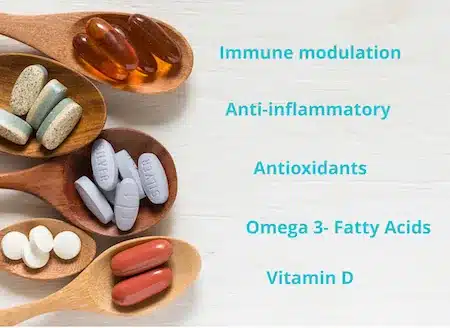
When appropriate, comprehensive lab testing can help guide nutrition, supplementation, metabolic support, and recovery planning.
IV Nutrient Therapy
In some cases, intravenous (IV) nutrient therapy is used in integrative oncology settings as a supportive tool during or after cancer treatment. These therapies are not a replacement for conventional care, but may play a role in improving quality of life, supporting recovery, and addressing specific physiological imbalances.
IV nutrient therapy allows nutrients and fluids to be delivered directly into the bloodstream, bypassing digestion and achieving higher circulating levels than oral supplementation.
In oncology and survivorship care, this may be considered for:
✔ Supporting nutrient status in patients with impaired absorption or increased metabolic demand
✔ Assisting with energy and recovery, especially after chemotherapy or radiation
✔ Addressing hydration and electrolyte balance, which can be disrupted during treatment or recovery
✔ Providing targeted repletion when oral intake is insufficient or poorly tolerated
Even in more advanced care settings, IV therapy is frequently used with a focus on supportive care and quality of life, rather than as a stand-alone intervention.
General IV Therapy in Post-Treatment Recovery
After cancer treatment, many patients are rebuilding their metabolic health, nutritional status, energy, and overall resilience.
In this setting, IV therapy is often used in a foundational, restorative role, such as:
👉🏼 Rehydration support using isotonic fluids (e.g., saline or lactated Ringer’s)
👉🏼 Electrolyte balancing to support cellular function
👉🏼 Basic nutrient repletion (e.g., B vitamins, magnesium)
👉🏼 Support for fatigue and recovery
These types of IV therapies are not designed to directly target cancer cells, but rather to support the internal environment. This helps the body recover, stabilize, and function more effectively.
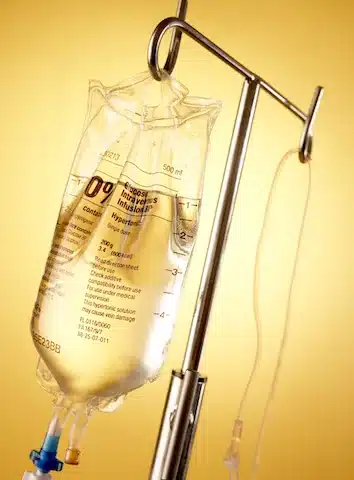
This is particularly relevant given that many cancer patients experience:
🔹 Ongoing metabolic stress
🔹 Changes in nutrient utilization
🔹 Fatigue and reduced resilience
Specialized Treatments: High-Dose Vitamin C (IVC) & Mistletoe (Viscum Alba)
High-Dose IV Vitamin C
Intravenous vitamin C is sometimes discussed in integrative oncology because IV administration can produce blood levels that are much higher than oral vitamin C. Some laboratory and clinical research has explored how high-dose IV vitamin C may affect oxidative stress, treatment tolerance, quality of life, and cancer-related symptoms.
However, IV vitamin C is not considered a stand-alone cancer treatment and should not be used as a replacement for surgery, chemotherapy, radiation, immunotherapy, targeted therapy, or follow-up care recommended by an oncology team.
When used, IV vitamin C should be carefully individualized. Clinicians typically consider kidney function, medication interactions, treatment timing, cancer type, overall health status, and lab markers such as G6PD before recommending high-dose IV vitamin C.
Lower-dose IV vitamin C, on the other hand, is more commonly used for:
- Antioxidant support
- General immune support
- Quality of life improvements during and after treatment
A balanced perspective
- IV vitamin C is being studied and used in integrative oncology settings
- It is not considered a primary cancer treatment
- Its role is best understood as adjunctive and supportive, with careful attention to dosing, timing, and patient selection
Mistletoe IV or Subcutaneous administration
In more specialized integrative oncology settings, additional therapies such as Viscum album extract are sometimes considered as part of supportive care. Mistletoe has been studied for its ability to modulate immune signaling, including effects on natural killer (NK) cells, cytokine activity, and overall immune responsiveness, as well as its role in improving quality of life, energy, and treatment tolerance in patients undergoing or recovering from cancer therapy.
Mistletoe can be administered either subcutaneously (low-dose, ongoing immune support) or intravenously (higher-dose, intermittent immune activation) depending on the clinical context. In post-treatment or remission phases, it is sometimes used to support immune surveillance, recovery from treatment-related immune suppression, and overall physiologic resilience.
While mistletoe is not considered a primary treatment for cancer or a guaranteed method of preventing recurrence, it may be used in select cases as part of a broader, individualized care plan under clinical supervision, particularly when there is a goal of enhancing immune regulation and supporting long-term recovery.
Safety Considerations
IV therapy is not appropriate for every patient. Before considering treatment, clinicians typically evaluate:
- Kidney function
- Cardiovascular status
- Nutritional status
- Current and prior cancer treatments
- Relevant lab markers (such as G6PD when using high-dose vitamin C)
This ensures that therapies are used safely and appropriately.
Cancer-Specific Considerations
Breast cancer
➡️ Hormonal Balance
➡️ Body Composition
➡️ Alcohol Intake
Prostate cancer
➡️ Metabolic Health
➡️ Inflammation
➡️ Physical Activity
Colon cancer
➡️ Fiber Intake
➡️ Gut Health
➡️ Diet Quality
Ovarian and bladder cancers
➡️ Systemic Inflammation
➡️ Kidney, liver, and metabolic health
➡️ Overall Resilience
These are general patterns, so while they are not individualized treatment plans, it can be helpful to consider the health factors that may influence recovery, resilience, and long-term following-up planning. From here it can yield a more simplified approach to developing a plan of action.
When to Talk to Your Doctor
It’s important to stay engaged with your care team.
Reach out if you notice:
❗️New or persistent symptoms
❗️ Unexplained fatigue or weight changes
❗️ Pain that doesn’t resolve
Seek urgent medical care if you experience sudden or severe symptoms, unexplained bleeding, chest pain, difficulty breathing, neurological changes, rapid weight loss, or severe pain.
And stay consistent with:
✅ Follow-up visits
✅ Imaging when recommended
✅ Lab monitoring

FAQ
Can cancer recurrence be prevented?
Cancer recurrence cannot be fully prevented or guaranteed. However, evidence-informed lifestyle habits, regular follow-up care, and individualized medical support may help reduce risk and support long-term health.
What foods help prevent cancer recurrence?
A whole-food eating pattern that emphasizes vegetables, fruit, legumes, whole grains, healthy fats, and adequate protein is a strong foundation. It is also wise to limit ultra-processed foods, excess added sugar, processed meats, and alcohol.
Does exercise reduce recurrence risk?
Regular physical activity is associated with better metabolic health, improved body composition, reduced fatigue, and improved quality of life. In some cancers, exercise may also be associated with lower recurrence risk and better survival outcomes.
What supplements should I take?
Supplements should be individualized. Some patients may benefit from targeted nutrient support, but high-dose or unsupervised supplements can interact with medications or cancer treatments. Always work with a qualified clinician.
Do medications like tamoxifen or aromatase inhibitors prevent recurrence?
These medications are often prescribed as part of conventional care and can reduce recurrence risk in certain cancers. Decisions around their use should always be made with your oncology team.
Is IV vitamin C a cancer treatment?
No. IV vitamin C is not a replacement for conventional cancer care. In integrative oncology settings, it may be considered as an adjunctive supportive therapy in select patients under medical supervision.
When should I talk to my doctor about recurrence concerns?
Talk to your doctor if you notice new or persistent symptoms, unexplained fatigue, weight changes, pain that does not resolve, changes in appetite, new lumps, or anything that feels unusual for your body.
Final Thoughts
Survivorship is not about doing everything. It is about sitting down and highlighting the areas that require focus. It takes looking at what matters the most and doing it consistently.
Small, steady changes in nutrition, movement, sleep, and stress can create meaningful shifts over time.
You don’t need a perfect plan. You need a sustainable one that considers the whole person.
For patients looking for individualized support after treatment, RHMC offers naturopathic cancer support designed to work alongside conventional oncology care. You can request an appointment with the RHMC team to discuss a survivorship-focused care plan.
Personalized Cancer Survivorship Support in Santa Barbara
Cancer survivorship is not one-size-fits-all. Your plan should reflect your diagnosis, treatment history, current symptoms, lab markers, medications, nutrition, energy, sleep, stress, and long-term goals.
At Regenerate Health Medical Center, our team provides individualized naturopathic and integrative support for patients who want a thoughtful, whole-person approach after cancer treatment. Our care is designed to work alongside your oncology team, not replace it.
If you are looking for support with nutrition, recovery, metabolic health, IV nutrient therapy, supplementation, or a personalized survivorship plan, you can request an appointment with RHMC.
Disclaimer
This content is for educational purposes only and is not a substitute for medical advice, diagnosis, or treatment. Always consult your healthcare provider before making changes to your care plan.