If you’ve ever felt exhausted but unable to relax or mentally “on” even when your body is tired, your nervous system may be struggling to shift out of survival mode.
And it is not just being tired throughout the day. Sometimes you are drained during the day but suddenly alert at night.
The reason may be that your nervous system is struggling to shift out of stress mode and back into recovery mode.
One of the most useful ways we can measure this is through something called heart rate variability or HRV.
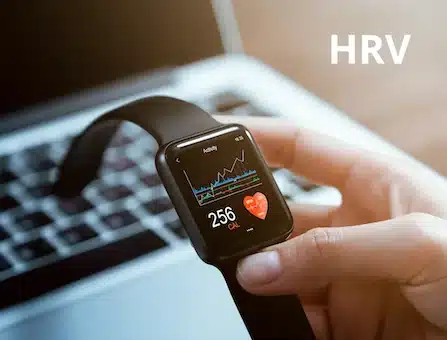
Over the last few years, HRV has become more popular through wearables like Garmin, Oura, Apple Watch, and Whoop.
Wearable devices helped bring HRV into the mainstream by showing people how sleep, stress, exercise, alcohol, hydration, and recovery habits can influence their nervous system over time.
HRV can offer meaningful insight into how well your body is adapting to stress and recovering from daily life.
And for many people, learning how to increase HRV is really about learning
how to help the body feel safe enough to recover again.
Quick Answer: How to Increase HRV Naturally
You can often increase HRV by improving sleep consistency, reducing alcohol, practicing slow breathing, exercising regularly without overtraining, staying hydrated, stabilizing blood sugar, managing stress, and building daily recovery habits. HRV is highly individual, so the goal is not to chase a perfect number. The goal is to improve your personal trend over time.
- Practice 5–10 minutes of slow nasal breathing daily
- Keep a consistent sleep and wake schedule
- Limit alcohol, especially close to bedtime
- Use regular walking, Zone 2 cardio, and strength training with recovery
- Support hydration, electrolytes, protein, and blood sugar balance
- Use HRV trends to guide recovery instead of comparing yourself to others
What Is HRV and Why Does It Matter?
Heart rate variability (HRV) refers to the small variations in time between heartbeats. Despite the name, HRV is not primarily a “heart problem” measurement. It’s better understood as a reflection of your autonomic nervous system, which is also known as the system responsible for stress response, recovery, energy regulation, sleep, and resilience.
In general, we see that a higher HRV is associated with greater adaptability and recovery capacity, while a lower HRV can reflect stress, illness, inflammation, fatigue, poor sleep, or nervous system strain.
This comes from the body balancing between two major systems:
Sympathetic Nervous System
Sympathetic Nervous System is known as our fight-or-flight or stress response and people who are operating from this gear can be stuck in survival mode.
This system helps you:
✔ stay alert
✔ react quickly
✔ perform under pressure
But when it stays elevated for too long, people often begin to feel:
👉🏼 Tense
👉🏼 Restless
👉🏼 Anxious
👉🏼 “Wired But Tired”
Parasympathetic Nervous System
This is considered our rest-and-recovery system for digestion and repair state. People who struggle to engage this gear often find themselves unable to achieve recovery mode.
What Is a Good HRV?
This is one of the most common questions people ask.
Giving one universal “optimal HRV” number is not very useful because HRV varies significantly from person to person. The relative HRV an individual displays is a better measurement of overall recovery capacity.
A “good” HRV for one person may be completely normal for another.
That’s why comparing yourself to strangers online is often misleading.
Instead of obsessing over a single number, the more useful question is:
“What is normal for me, and is it trending up or down?”
What Causes Low HRV?
There are many possible low HRV causes, and often several are happening at once.

Poor Sleep
Sleep is one of the strongest drivers of HRV.
This is where quality can matter as much as quantity. Even if you technically get enough hours, your HRV may drop from:
Inconsistent Sleep Timing ⏱️
Alcohol Use 🍷
Overheating During Sleep 🥵
Late-Night Eating 🍔
Excessive Screen Exposure Before Bed 📱
Many people trying to increase HRV during sleep see improvement simply by stabilizing bedtime consistency or Practicing Healthy Sleep Hygiene.
A functional health assessment can help evaluate deeper contributors to low HRV, including sleep quality, stress load, metabolic health, inflammation, and recovery capacity.
Chronic Stress and Anxiety
This is one of the most common patterns I see clinically.
People come in struggling with racing thoughts at night, difficulty slowing down mentally, waking up exhausted, and feeling physically tired but internally tense
The body may no longer feel safe enough to fully downshift into recovery.


Illness, Inflammation, and Dehydration
Low HRV can also reflect:
☝🏼 Acute Illness
☝🏼 Chronic Inflammation
☝🏼 Overreaching Physically
☝🏼 Poor Hydration
☝🏼 Metabolic Strain
Many people notice HRV drops before they even realize they’re getting sick. This is where some of the wearable biometric devices can show trends even before symptoms develop.
When low HRV is persistent, comprehensive lab testing may help identify patterns related to inflammation, nutrient status, hormones, blood sugar, or metabolic stress.
How to Increase HRV Naturally
If you’re searching how to improve HRV, the goal is not to become perfectly relaxed all the time. The goal is to improve your ability to recover, adapt, and shift out of stress mode efficiently.
1. Build a Daily Nervous System “Downshift”
One of the most effective nervous system regulation techniques is surprisingly simple:
Slow Breathing 😮💨
Intentional Pauses ⏸️
Consistent Recovery Moments 🧘🏻♀️
Even 5–10 minutes per day can help.
Your nervous system responds more to:
Repeated signals of safety, than occasional intense relaxation attempts
↪ Simple starting points:
↪ Slow Nasal Breathing
↪ Longer Exhales
↪ Quiet Walks Without Stimulation
↪ Guided Relaxation Practices
When trying to regulate the nervous system, consistency matters. Recovery is a skill the body can often relearn with repeated daily practice.
2. Improve Sleep Consistency
If you want to increase HRV overnight, sleep timing matters enormously.
✔️ Helpful strategies for better sleep hygiene include:
✔️ Consistent Sleep/Wake Times
✔️ Reducing Late Caffeine
✔️ Limiting Alcohol
✔️ Cooler Sleeping Environments
✔️ Minimizing Bright Light Before Bed
3. Focus on Recovery-Based Movement
Exercise is important, but recovery matters equally.
Generally, HRV tends to improve with:
✔️ Regular Walking
✔️ Zone 2 Cardiovascular Training
✔️ Strength Training With Adequate Recovery
✔️ Mobility and Restorative Movement
For people who feel depleted, overtrained, or unsure how hard to exercise, medically supervised fitness can help match movement intensity to recovery capacity.
4. Stabilize Blood Sugar and Hydration
Nutrition plays a larger role in nervous system regulation than many people realize.
Large blood sugar swings can increase:
👉🏼 Cortisol Output
👉🏼 Sympathetic Activation
👉🏼 Sleep Disruption
Helpful basics include:
➡ Prioritizing Protein
➡ Increasing Fiber
➡ Consistent Hydration
➡ Electrolyte Support When Appropriate
➡ Reducing Excessive Ultra-Processed Foods
Personalized clinical nutrition can support steadier blood sugar, hydration, energy, and nervous system resilience.
5. Train the Nervous System Directly
This is where many people finally begin seeing lasting change.
Rather than simply hoping the body relaxes, therapies focused on nervous system regulation may help teach the system how to
recover again.
Therapies That May Support HRV and Nervous System Regulation
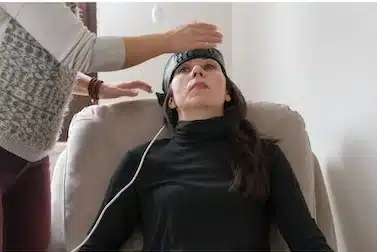
Biofeedback
Patients can learn the same techniques mentioned above but customized to fit a recovery program that increases HRV systematically with objective data.
Think of it as training recovery the same way you would train strength or endurance.
Craniosacral Therapy
Craniosacral therapy is a gentle hands-on approach that may help calm tension patterns within the nervous system. Patients often report deep relaxation, reduced tension, improved sense of ease, and a stronger sense of clarity after regular sessions.
For people who feel like they “can’t relax,” this can sometimes help the body access recovery states more easily.

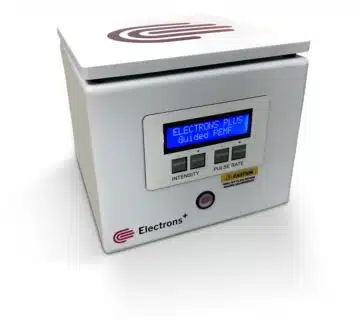
PEMF Therapy
PEMF therapy uses pulsed electromagnetic fields and is sometimes used as part of a broader recovery plan. Some patients report feeling more relaxed or noticing improvements in recovery, sleep, or physical tension, although research is still evolving.
Some patients report benefits related to their recovery capacity or stress reduction. From physical injuries to sleep issues to even benefiting mood, PEMF is a well-established therapy that promotes healing from within the body.
Many of you reading this might be aware of PEMF in the form of a grounding mat, but in a clinical setting, guided PEMF therapy can be applied more intentionally based on the patient’s symptoms, recovery goals, and treatment plan.
While research is still evolving, guided PEMF is increasingly being explored as part of broader recovery and nervous system support strategies.
When to Talk to a Doctor About Low HRV
Low HRV is not always a medical problem, especially if it is only one isolated reading. However, persistent low HRV may be worth discussing with a clinician if it comes with ongoing fatigue, poor sleep, dizziness, shortness of breath, chest discomfort, heart palpitations, unexplained anxiety, frequent illness, or a major drop in exercise tolerance.
HRV should be viewed as one piece of the bigger picture. A clinician can help evaluate possible contributors such as sleep disruption, chronic stress, inflammation, hormone changes, blood sugar imbalance, medication effects, dehydration, illness, or overtraining.
Personalized Nervous System and HRV Support in Santa Barbara
If you are dealing with low HRV, poor sleep, chronic stress, fatigue, anxiety, or feeling “tired but wired,” RHMC can help you look beyond the number and understand what your body may be trying to communicate.
Our team can help evaluate sleep, stress load, nutrition, movement, inflammation, hormones, recovery capacity, and nervous system regulation to build a personalized plan that supports long-term resilience.
Request an appointment to explore a practical nervous system reset plan.
FAQ About How to Increase HRV
What causes low HRV?
Low HRV can reflect stress, poor sleep, illness, inflammation, alcohol use, overtraining, dehydration, blood sugar swings, medication effects, or nervous system strain.
Is low HRV bad?
Not always. HRV varies significantly between individuals. Trends over time are usually more meaningful than one isolated number.
What is a dangerously low HRV?
There is no universal “dangerously low” HRV number because HRV depends on age, baseline fitness, genetics, health status, medications, and measurement method. A sudden major drop or persistent low HRV with symptoms should be discussed with a clinician.
How can I increase my HRV quickly?
The fastest improvements often come from improving sleep, reducing alcohol, practicing slow breathing, hydrating well, eating balanced meals, and avoiding overtraining. Long-term HRV improvement usually requires consistency.
How do I increase HRV during sleep?
To support HRV during sleep, keep a consistent bedtime, reduce alcohol, avoid heavy meals late at night, keep your room cool, limit bright light before bed, and create a calming wind-down routine.
Can breathing exercises increase HRV?
Yes, slow breathing and HRV biofeedback may help improve parasympathetic activity and nervous system regulation. Even 5–10 minutes per day can be a useful starting point.
Can exercise increase HRV?
Exercise can support HRV over time, especially when balanced with adequate recovery. Walking, Zone 2 cardio, strength training, and mobility work can help, but overtraining may temporarily lower HRV.
Why is my HRV low even though I exercise?
Your HRV may be low if exercise stress is exceeding recovery. Poor sleep, dehydration, under-fueling, alcohol, life stress, illness, and overtraining can all lower HRV even in active people.
Many people trying to increase HRV are not actually chasing a number.
They’re chasing:
🔹 Deeper Recovery
🔹 Calmer Energy
🔹 Resilience
🔹 Better Sleep
🔹 Feeling Like Themselves Again
Final Thoughts
HRV simply gives us a measurable window into that process. What is fascinating is the awareness that arises when we start correlating how we feel with our HRV. I have both in my personal life and with patients that guessing your HRV gets easier with time. This is because the more you work on your HRV, the more you become increasingly sensitive to subtle shifts in energy and readiness.
And while no wearable or therapy replaces the fundamentals of health, HRV can be a powerful tool for understanding how your body is responding to stress and how to help it recover more effectively.
If you are struggling with low HRV, poor sleep, chronic stress, or feeling tired but wired, you can request an appointment with RHMC to explore a personalized nervous system reset plan.
References
- Shaffer, F. & Meehan, Z. M. A practical guide to resonance frequency assessment for HRV biofeedback. Frontiers in Neuroscience. 14, 570400 (2020).
- Lehrer, P. M. & Gevirtz, R. Heart rate variability biofeedback: how and why does it work? Frontiers in Psychology. 5, 756 (2014).
- Goessl, V. C., Curtiss, J. E. & Hofmann, S. G. The effect of HRV biofeedback training on stress and anxiety: a meta-analysis. Psychological Medicine. 47, 2578–2586 (2017).
- Mather, M. & Thayer, J. F. How heart rate variability affects emotion regulation brain networks. Current Opinion in Behavioral Sciences. 19, 98–104 (2018).
- Laborde, S. et al. Effects of voluntary slow breathing on heart rate and heart rate variability: a systematic review and meta-analysis. Neuroscience & Biobehavioral Reviews. 138, 104711 (2022).
- McCraty, R. & Shaffer, F. Heart Rate Variability: New perspectives on physiological mechanisms, assessment of self-regulatory capacity, and health risk. Global Advances in Health and Medicine. 4, 46–61 (2015).
- Vaschillo, E. G., Vaschillo, B. & Lehrer, P. Characteristics of resonance in heart rate variability stimulated by biofeedback. Applied Psychophysiology and Biofeedback. 31, 129–142 (2006).
- Quigley, K. S. et al. Publication guidelines for human heart rate and heart rate variability studies in psychophysiology. Psychophysiology. e14604 (2024).
- Nashiro, K. et al. Increasing coordination and responsivity of emotion-related brain regions with a heart rate variability biofeedback randomized trial. Cognitive, Affective, & Behavioral Neuroscience. 23, 66–83 (2023).
- Balaji, S. et al. Heart rate variability biofeedback in a global study of the most common coherence frequencies and the impact of emotional states. Scientific Reports. 15, 3241 (2025).