Your Birthday Doesn’t Tell The Whole Story.

Two people can both be 55 years old and be aging very differently. One may have strong metabolic health, low inflammation, good muscle mass, and plenty of energy. The other may already be showing signs of insulin resistance, vascular stress, chronic inflammation, or accelerated cellular aging.
Their chronological age is identical. Their biology may not be.
But there’s also a lot of hype.
At Regenerate Health Medical Center, we’re interested in both.
The important part is knowing the difference.
The 10 Longevity Markers at a Glance
Marker | What It Helps Us Understand |
Epigenetic clocks | DNA methylation and biological aging patterns |
Proteomic aging clocks | Age-related patterns in proteins |
GlycanAge | Immune-system glycans and inflammatory aging |
GDF-15 | Cellular and mitochondrial stress |
Metabolomic markers | Age-related metabolic patterns |
ApoB + Lp(a) | Cardiovascular risk that standard cholesterol can miss |
Fasting insulin + HOMA-IR | Early metabolic dysfunction |
hs-CRP + IL-6 | Systemic inflammation |
Homocysteine | Methylation and nutrient-related metabolic pathways |
Oxidative stress markers | Cellular damage from oxidative stress |
Chronological Age, Biological Age, and Healthspan
Chronological age is easy. It’s the number of candles on your birthday cake.
Biological age is more complicated. It attempts to describe how your cells, organs, metabolism, immune system, and other physiological systems are functioning relative to your chronological age.
And then there’s healthspan, which we think deserves at least as much attention as lifespan.

Living longer isn’t terribly appealing if the last 20 years are spent progressively losing strength, mobility, cognitive function, and independence. Longevity medicine should be concerned with maintaining function and resilience for as much of life as possible.
Testing gives us clues about where that process may be heading and often what can be done now to improve things.
The New Frontier of Biological Aging
This is where longevity medicine gets especially interesting. Researchers are developing increasingly sophisticated ways of measuring aging itself rather than waiting for disease to appear.
These tests have enormous potential. They also need to be interpreted with the guidance of an experienced clinician.
1. Epigenetic Clocks
Your DNA sequence doesn’t necessarily change as you age, but the way your genes are regulated does.
One of those regulatory mechanisms is DNA methylation, small chemical tags attached to DNA that influence gene activity.

Scientists have identified patterns of methylation that change predictably with aging and developed “epigenetic clocks” from them.
Some clocks estimate biological age. Newer ones attempt to measure disease risk or even the pace at which someone appears to be aging.
At RHMC, one of the biological-age platforms we currently use is TruDiagnostic.
You may have also heard about telomere testing. Telomeres protect the ends of chromosomes and tend to shorten with age, but telomere length varies considerably between people. For that reason, many longevity researchers are now looking beyond telomere length alone toward more information-rich epigenetic measures.
2. Proteomic Aging Clocks
Proteomics looks at proteins circulating throughout the body.
Because proteins reflect what tissues are actually doing, certain protein patterns can reveal how individual organs are aging. Researchers are even studying whether your heart, brain, kidneys, immune system, and other organs can effectively have different biological ages.
That’s a remarkable concept.
While it is commercially available, it is also largely a research tool today, not something we would use by itself to make major treatment decisions.
3. GlycanAge
Glycans are sugar molecules attached to proteins throughout the body. Certain glycans attached to IgG antibodies appear to change with age and inflammatory activity.
GlycanAge is one commercial test that uses these patterns to estimate aspects of biological aging.
We find this area interesting because aging and immune function are intimately connected; thus, epigenetic testing can provide insight into a patient’s pace of aging.
4. GDF-15
GDF-15 is one of the more interesting biomarkers coming out of aging research.
Cells can release GDF-15 when they’re under stress. Higher levels have been associated with mitochondrial stress, inflammation, frailty, declining physical function, and a variety of chronic health conditions.
That sounds useful, but there’s a catch: GDF-15 can rise for many different reasons.
That makes it interesting as a research marker but much less useful as a stand-alone answer to the question, “How healthy am I?”
RHMC believes these tests should be run under the guidance of a qualified physician that understands the full context of a patient’s health history and clinical presentation. Because these levels can shift for a variety of reasons, making sense of GDF-15 labs values takes a proper medical work-up to deliver patients an accurate reading on their biological clock.

5. Metabolomic Aging Markers
Metabolomics examines small molecules produced as your body processes food, generates energy, builds tissue, detoxifies compounds, and carries out thousands of other biochemical reactions.
Researchers are identifying metabolic signatures associated with aging and disease risk.
This could eventually give us a remarkably detailed picture of how someone is aging. For now, metabolomic aging clocks remain much closer to the frontier than everyday clinical medicine.
How Much Should You Trust Biological Age Tests?
Enough to pay attention.
Not enough to hand them the keys.
Different biological-age tests can produce different results because they measure different aspects of aging. Even epigenetic clocks can respond differently to the same intervention, something researchers are actively trying to sort out.
We view these tests as another layer of information, particularly when followed over time.
A biological-age score should never outweigh the rest of the person sitting in front of us.
5 Longevity Markers You Don’t Want To Miss
The advanced testing gets attention, but some of the most useful longevity information comes from blood markers that have existed in clinical practice for decades but are often missing from routine blood panels.
This is where testing can become much more practical.
6. ApoB and Lp(a)
A standard cholesterol panel doesn’t always tell us enough about cardiovascular risk.
ApoB helps estimate the number of atherogenic particles capable of entering the artery wall. This can reveal risk that isn’t obvious from LDL cholesterol alone.
Lipoprotein(a), or Lp(a), is another frequently overlooked marker. Unlike many cardiovascular risk factors, Lp(a) is largely genetically determined, which is why testing it at least once can be valuable. We have seen major improvements in our patients without medication intervention, so this is one of our favorites to work on!
These deserve a deeper conversation, so we’ll be dedicating our next article specifically to ApoB and Lp(a).
7. Fasting Insulin and HOMA-IR
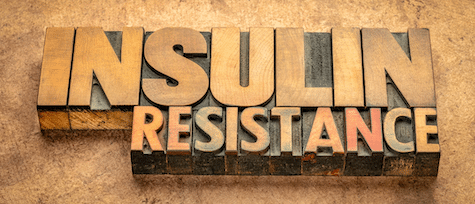
One of the metabolic patterns we care about catching early is insulin resistance.
Blood glucose can still look relatively normal while the body is producing more and more insulin to keep it there.
That’s why fasting insulin adds information glucose alone cannot.
When fasting glucose and insulin are evaluated together, we can also calculate HOMA-IR, an estimate of insulin resistance. There isn’t one universally accepted “perfect” HOMA-IR number because values vary by population, age, laboratory methodology, and metabolic health.
The bigger lesson is important: waiting for blood sugar to become abnormal may mean waiting until metabolic dysfunction has already been developing for years.
8. hs-CRP and IL-6
Inflammation is necessary for healing. Chronic, unresolved inflammation is another story.
Researchers sometimes use the term “inflammaging” to describe the persistent low-grade inflammatory activity associated with aging and many chronic diseases.
High-sensitivity C-reactive protein (hs-CRP) and interleukin-6 (IL-6) give us different windows into inflammatory activity.
We don’t simply want to see inflammation and suppress it. At RHMC, the more useful question is why is the inflammatory signal there in the first place?
Infection, visceral fat, poor metabolic health, gut dysfunction, environmental exposures, sleep disruption, chronic stress, toxins, injuries and other factors can all become pieces of that investigation.
9. Homocysteine and Methylation-Related Nutrients
Homocysteine is an amino acid produced during normal metabolism. Its processing depends partly on nutrients including folate, vitamin B12, and vitamin B6.
When homocysteine is elevated, we want to understand why.
This is where conversations about methylation sometimes become overly simplistic. Finding elevated homocysteine does not automatically mean someone needs high-dose B vitamins, and lowering homocysteine with B-vitamin supplementation has not consistently translated into fewer cardiovascular events but can still be useful in other aspects of health.
The number is a clue.
The clinical value comes from understanding the nutrient status, genetics, kidney function, medications, diet, and broader health picture surrounding it.
10. Oxidative Stress Biomarkers
Every day your cells generate reactive molecules as part of normal metabolism.
Your body also has antioxidant systems designed to keep them in balance.

When that balance shifts too far, oxidative stress damages DNA, proteins, cell membranes, and mitochondria. Markers such as 8-OHdG can help assess certain types of oxidative damage.
This is also where environmental medicine becomes relevant. Tobacco smoke, air pollution, toxic metal exposures, EMFs, chronic inflammation, metabolic dysfunction, and other stressors increase oxidative burden.
Again, symptoms and abnormal markers are signals. The job is to understand what is creating the signal. The higher this is, the more motivating it can be to make changes both to lifestyle and health treatment plans to reverse the damage. IV antioxidants? Yes, please!
How RHMC Approaches Longevity Testing in Santa Barbara

At Regenerate Health Medical Center, we aren’t interested in collecting exotic biomarkers just because they sound impressive.
We want information we can put into context and use to better your health.
Our Naturopathic Medical Doctors can combine advanced longevity testing with metabolic markers, cardiovascular risk factors, hormones, inflammation, nutrient status, gut health, environmental exposures, body composition, symptoms, and your medical history.
We can also incorporate newer tools such as epigenetic biological-age testing when they add useful information.
Because the goal isn’t to chase a younger number on a laboratory report.
The goal is to understand where your body may be losing resilience now, while there is still time to do something meaningful about it.
That is where longevity medicine becomes much more than “anti-aging.”
It Becomes Proactive Healthcare.
Curious what your labs say about how you’re aging? Schedule a consultation with an RHMC Naturopathic Medical Doctor to build a longevity testing plan around your health history, current concerns, and long-term goals.