Exosome therapy refers to investigational approaches that use products containing these particles to influence cellular signaling. Understanding how exosomes work naturally does not establish that a manufactured product is safe or effective for a particular condition.
The FDA states that there are no FDA-approved exosome products. This guide explains the biology, the limits of human research, and the questions to ask before considering a product.
At Regenerate Health Medical Center (RHMC) in Santa Barbara, we want patients to understand both the science and its limits. The useful questions are straightforward: What does a product contain? What has actually been tested in people? What remains unknown?
This article provides education about exosomes and the secretome. It does not establish that a particular exosome product is an appropriate treatment for you.
What Are Exosomes?
Exosomes are tiny membrane-bound particles released by cells. They form inside cells and can carry proteins, lipids, RNA, and other molecules to other cells.
Think of them as packages carrying biological messages. The contents of a package, and the cell receiving it, help determine its effects.
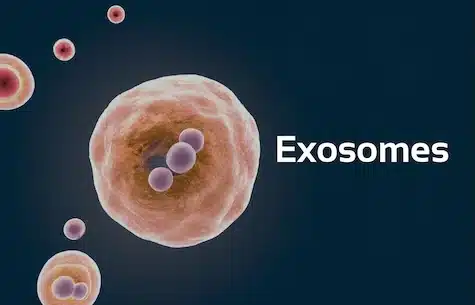
Exosomes belong to a broader group called extracellular vesicles (EVs). Not every EV is an exosome. Researchers need evidence about how a vesicle formed before using that more specific name.
The MISEV2023 guidelines published in the Journal of Extracellular Vesicles explain why identifying and characterizing these particles matters. A product label alone cannot tell you exactly what is inside.
Cell signaling is a compelling subject for research. Demonstrating a useful effect in a laboratory is a different task from showing that a treatment improves a patient’s health.
Exosomes Are Part of Something Bigger: The Secretome
You’ll sometimes hear another term alongside exosomes: the secretome. This means the collection of substances a cell releases into its surroundings.
It includes soluble signaling molecules, such as growth factors and cytokines, as well as extracellular vesicles. Exosomes are one component of this larger system; the secretome and exosomes are not interchangeable terms.
Researchers study these secreted substances to understand how cells influence nearby and distant tissues. That interest helps explain why research has expanded beyond living stem cells themselves.
Where Do Exosomes Come From?
Your own cells naturally release extracellular vesicles. Researchers can find them in biological fluids, including blood.
When we are talking about products being studied for treatment, however, the source matters considerably.
One research source is mesenchymal stromal/stem cells (MSCs), which may be obtained from bone marrow, fat tissue, or donor-sourced umbilical cord tissue such as Wharton’s jelly. Other cell sources are also being investigated.
The starting cells, culture conditions, and collection methods can affect the resulting particles. A familiar source name does not establish a product’s purity, dose, or clinical effectiveness.
“Exosomes” are not one standardized product.
Two products carrying the word exosome on the label aren’t automatically equivalent.
Source, collection, processing, concentration, storage, purity, sterility, and testing can all differ. Even the molecular cargo carried inside extracellular vesicles can vary depending on the cells they came from and the environment those cells experienced.
That variability is one reason this field deserves thoughtful medical attention rather than hype.
What Is Exosome Therapy?
Exosome therapy is an investigational approach using products containing exosomes or other extracellular vesicles with the aim of influencing cellular signaling.
Researchers are asking whether vesicles can deliver useful molecular signals or carry medicines to particular cells. A proposed mechanism is a starting point for testing, not proof of a treatment benefit.
To evaluate a specific use, we need to know what was administered, at what dose, by which route, to which patients, and how outcomes compared with an appropriate control group.
From a naturopathic medicine perspective, understanding the whole biological system is valuable. That perspective still requires us to ask whether a proposed intervention has credible evidence for the person and condition being treated.
Exosomes vs. Stem Cells: They’re Not the Same Thing
Stem cells are living cells. Exosomes are particles released by cells. Exosomes do not become new tissues in the way that living cells may differentiate under suitable conditions.
Researchers study both the behavior of MSCs and the substances they release. Those secreted substances include soluble factors and several types of extracellular vesicles, not only exosomes. It would be an oversimplification to attribute every MSC effect to exosomes.
That distinction helps explain interest in the secretome while keeping three different concepts separate: living cells, the substances they release, and individual vesicle types.
Exosomes vs. PRP: Two Very Different Approaches
Platelet-rich plasma (PRP) is prepared from a patient’s own blood by concentrating platelets. Exosome products may be produced from donor cells or other sources and processed in very different ways.
Both involve biological signaling, but they are not interchangeable. Evidence for PRP cannot be transferred to an exosome product, and one exosome study cannot establish the effectiveness of every marketed preparation.
There is no sound basis for calling exosomes universally better than PRP. The comparison needs to address a specific condition, preparation, procedure, and outcome.
For background on RHMC’s services, read about PRP therapy and PRP facials. A consultation should include the evidence, limitations, and alternatives relevant to your situation.
What Does Human Research Show About Exosome Therapy?
Researchers are studying how extracellular vesicles influence immune communication, inflammatory signaling, blood vessel formation, and tissue responses. Much of the work explaining these mechanisms comes from laboratory and animal research.
Human studies exist, but their findings need context. A 2024 scoping review of extracellular vesicles as human therapeutics identified 40 published studies through the end of 2023. They were small pilot trials with substantial differences in the products, conditions, doses, and administration routes studied.
A separate 2024 systematic review and meta-analysis of EV clinical trials included 21 reports. It described encouraging early observations but emphasized differences in manufacturing, study design, and adverse-event reporting. These studies do not establish that a commercially marketed product is safe or effective for your intended use.
What Makes a Study Useful?
When reading a claim about exosome therapy, ask whether the research involved people or only cells and animals. Then check whether it tested the same product, route, and condition being discussed.
A comparison group, meaningful patient outcomes, enough participants, and adequate follow-up make findings easier to interpret. A change in a laboratory marker alone does not necessarily mean a patient feels or functions better.
The practical takeaway: interest in exosome biology is justified, but broad claims about established treatment benefits go beyond what these early human studies can tell us. Results must be assessed product by product and use by use.
Are Exosomes Safe?
There is no blanket safety assurance for products marketed as containing exosomes.
Safety depends on a product’s contents, manufacturing, testing, dose, route, and the person receiving it. Long-term risks may not be captured by a small study or short follow-up.
The FDA has reported serious adverse events involving unapproved exosome products. Its warning is a reason to ask about actual evidence and oversight, rather than relying on words such as “natural,” “cell-free,” or “tested.”
Quality controls matter, but they do not replace clinical evidence. Discuss the proposed product, possible risks, alternatives, and follow-up plan with a qualified clinician before making a decision.

Is Exosome Therapy FDA Approved?
No. The FDA states that there are currently no FDA-approved exosome products. Products intended to treat disease are subject to drug and biological-product requirements. “Investigational” does not mean approved or proven.
Read the FDA public safety notification on exosome products for its patient guidance. Ask whether the FDA has reviewed the proposed treatment and request documentation of the relevant Investigational New Drug (IND) application when applicable.
A listing on a trial website or registration of a facility should not be presented as FDA approval of a product.
The Bigger Story Is Cellular Communication
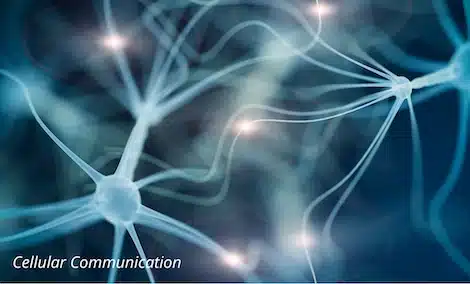
The most interesting thing about exosomes may ultimately be bigger than exosome therapy itself. They help researchers explore how cells respond to information from their surroundings.
That biology can improve the questions we ask about health without establishing that any particular marketed product is beneficial.
At RHMC, we consider nutrition, sleep, movement, stress, metabolic health, and other factors when discussing a patient’s care. Understanding cellular communication fits that wider perspective.
The next step is still to evaluate each proposed treatment on its own evidence, risks, and relevance to the individual. A biological explanation should support an informed conversation rather than substitute for one.
Exosome Injections, IV Products, and Topical Products
You may see exosome products advertised as injections, intravenous (IV) infusions, or topical skincare preparations. These are different uses and routes of exposure. Findings from one route should not be assumed to apply to another.
A product applied after microneedling is also a different exposure from a product applied to intact skin. Ask what evidence and regulatory status apply to the exact procedure being proposed. “Topical” is not a substitute for product-specific evidence or FDA approval.
How to Choose an Exosome Therapy Clinic
If you’re researching an exosome therapy clinic, start with the clinician’s qualifications and the evidence for the exact product and procedure being proposed. A thorough consultation should explain potential risks, regulatory status, alternatives, and total costs—and give you room to ask questions without pressure.
Before making a decision, ask:
Who will evaluate and treat me? Ask about the clinician’s license, relevant training, and experience managing complications.
What exactly is in the product? Request information about its source, contents, manufacturing, and quality testing.
What evidence supports this use? Ask for human studies involving the specific product, condition, and method of administration—not just laboratory findings.
What is its regulatory status? Ask whether the FDA has reviewed the proposed treatment. If it is investigational, request information about the study’s authorization and oversight.
What are the risks and uncertainties? Discuss possible adverse effects, gaps in long-term safety information, and how complications would be handled.
What alternatives should I consider? Ask about established options, their evidence, and the potential consequences of delaying treatment.
What will the full process cost? Request a written breakdown covering the product, procedure, number of visits, follow-up, and additional charges.
A clear explanation of uncertainty is part of informed care. Promises of guaranteed results should prompt further questions.
How Much Does Exosome Therapy Cost?
There is no single meaningful price for everything marketed as “exosome therapy.” Products, routes, procedures, and treatment schedules differ. A skincare serum price cannot be used to estimate the cost of an injection or research procedure.
Ask for an itemized written explanation of the proposed procedure, product, number of visits, follow-up, and any additional charges. Check coverage directly with your insurer rather than assuming reimbursement. A higher price is not evidence of greater effectiveness.
Frequently Asked Questions About Exosome Therapy
Are Exosomes the Same as Stem Cells?
No. Stem cells are living cells; exosomes are a type of extracellular vesicle released by cells. A cell-derived product is not automatically a stem-cell treatment.
Are Exosomes Better Than PRP?
There is no universal answer. A useful comparison requires evidence for the same condition and meaningful patient outcomes. Neither shared signaling mechanisms nor marketing claims establish superiority.
Do Exosomes Work for Hair Loss, Skin, or Joint Pain?
These are separate research questions. An observation involving one condition or preparation does not establish benefit for another. Ask for human studies matching the intended use, along with a balanced explanation of their limitations.
Can Exosome Products Cause Cancer?
This cannot be answered with a blanket reassurance or alarm. If you have cancer, a history of cancer, or are receiving cancer treatment, involve your treating oncology team when discussing any proposed biologic product. Ask for product-specific safety evidence rather than assuming that “cell-free” means risk-free.
For more detail, see the research and safety sections above and the linked sources. No FAQ answer establishes that an unapproved product is appropriate for an individual patient.
Where Does Exosome Therapy Go From Here?
Further progress depends on well-designed clinical trials, reliable product characterization, consistent manufacturing, and adequate follow-up. Patient experiences can raise questions, but they cannot replace controlled research.
At RHMC, our job is to follow the evidence as it develops, explain uncertainty clearly, and help patients compare options in the context of their overall health.
Curious how regenerative medicine could fit into your care? Schedule a consultation with an RHMC doctor to discuss your health, your goals, and the evidence behind the options that may be appropriate for you.
About the author: Dr. Shayon Aram, ND is a naturopathic doctor at Regenerate Health Medical Center in Santa Barbara. His education includes a doctorate in naturopathic medicine and a master’s degree in counseling psychology from Bastyr University.
This article is for educational purposes and is not a diagnosis, individualized treatment recommendation, or substitute for appropriate medical care.